
 Main Website

What Are the Different Types of Road Rollers and What Are They Used For?
Choosing a road roller is not simply about selecting a machine with the right operating weight. Different rollers use different compaction methods and are designed for different materials, from soil and aggregate to asphalt pavement. A single drum vibratory roller, tandem roller, padfoot roller, and pneumatic tire roller can all perform compaction, but their working principles and ideal applications are not the same.
So, what are the different types of road rollers, and which one is suitable for your project? This article explains the main types of road rollers, their typical uses, and the key specifications to consider when choosing a machine. It also includes practical TDER product examples to help you understand how different roller configurations match real construction needs.
1. Quick Answer: What Are the Main Types of Road Rollers?
Road rollers come in different configurations for different materials, compaction effects, and working conditions. The main types include:
|
Type |
Compaction Principle |
Best For |
Typical Applications |
|
Single Drum Vibratory Roller |
Vibration + static pressure |
Soil, aggregate, road base |
Subgrade, embankments, site preparation |
|
Tandem/Double Drum Roller |
Steel drum pressure + vibration |
Asphalt surfaces |
Road paving, resurfacing, parking lots |
|
Padfoot (Sheep-Foot) Roller |
Pad penetration + kneading/shearing |
Cohesive soil |
Clay, embankments, earth-fill |
|
Pneumatic Tire Roller |
Tire pressure + kneading |
Asphalt and flexible pavement layers |
Pavement compaction, road maintenance |
|
Steel drum + pneumatic tire compaction |
Versatile asphalt work |
Paving, resurfacing, municipal maintenance |
|
|
Walk-Behind Roller |
Compact vibration or static compaction |
Small and confined areas |
Sidewalks, trenches, small repairs |
In simple terms, the material, required compaction effect, and jobsite access are the three main factors to consider when choosing a road roller. The following sections explain how each type works, where it is used, and what buyers should check before purchasing.
2. Different Types of Road Rollers and Their Uses
The six main road roller types differ mainly in compaction method, material, working depth, and jobsite conditions. Choosing the right type starts with understanding what material you need to compact and what kind of compaction effect the project requires.
(1) Single Drum Vibratory Rollers: For Soil and Road Base Compaction
A single drum vibratory roller uses a vibrating steel drum to combine static weight with dynamic compaction force. It is mainly used for soil, sand, gravel, aggregate, and road base, especially when deeper or large-area compaction is required.
Main advantages
- Strong dynamic compaction for soil and granular materials
- Good traction on loose or uneven ground
- Suitable for large-area earthwork and road base preparation
- More effective than static compaction when higher compaction force is required
Typical applications
- Road subgrade and base layers
- Embankments and earthwork
- Sand, gravel, and aggregate
- Building site and foundation preparation
- Large-scale ground compaction
Limitations
- Not the first choice for final asphalt surface finishing
- Less suitable for highly cohesive clay unless equipped with a padfoot drum
- Full-size models may be difficult to use in confined areas
What should buyers check?
- Material type and required compaction depth
- Operating weight and excitation force
- Drum width and production capacity
- Traction requirements on the jobsite
- Whether high-altitude operation is required
TDER configuration
TDER single drum vibratory rollers use a turbocharged Cummins engine and have a high power reserve, allowing operation at elevations above 4,000 m. The front and rear wheels use full-hydraulic drive, while articulated hydraulic steering and continuously variable forward/reverse travel improve maneuverability and traction.
For contractors working with different soil conditions, TDER models above 8 tons can also be customized with a removable padfoot drum, providing an option for cohesive soil compaction.
(2) Double Drum Rollers: For Asphalt Surface Compaction
Double drum rollers use two steel drums to compact the pavement surface. Unlike single drum rollers, their main role is uniform asphalt compaction and surface finishing, where consistent drum contact and good maneuverability around pavement edges are important.
Key advantages
- Continuous steel-drum contact provides uniform surface compaction
- Well suited to asphalt paving and resurfacing
- Good control when making repeated passes
- Effective for compaction near pavement edges and curbs
Typical applications
- Asphalt roads and streets
- Municipal road construction
- Parking lots and paved areas
- Asphalt intermediate and finishing layers
- Road maintenance and resurfacing
Limitations
- Less suitable for deep soil or thick granular base compaction
- Steel drums do not provide the same kneading effect as pneumatic tires
- Production capacity depends heavily on drum width and operating speed
What should buyers check?
- Required working width
- Vibration frequency and excitation force
- Edge-compaction performance
- Steering and visibility around curbs
- Ease of maintenance during continuous asphalt work
TDER configuration
TDER double drum rollers are equipped with Cummins engines and Danfoss travel and vibration motors. The fork-type frame design helps improve edge compaction, while the spacious cab with a rotating seat improves operator comfort. The entire cab can tilt sideways, providing easier access for maintenance.
(3) Padfoot (Sheep-Foot) Rollers: For Cohesive Soil Compaction
Padfoot rollers are designed for clay, silty soil, and other cohesive materials. Instead of relying mainly on a smooth steel surface, the raised pads penetrate the soil and create a kneading and shearing effect.
Why are padfoot rollers different?
- Pads penetrate into cohesive soil rather than simply pressing the surface
- Kneading action helps compact thicker soil layers
- Particularly effective where smooth-drum vibration alone is less suitable
Typical applications
- Clay and cohesive soil
- Embankments and earth-fill projects
- Cohesive road subgrade
- Dam and earth-structure construction
- Large-scale soil preparation
Limitations
- Not designed for asphalt finishing
- Less effective on clean, loose granular materials
- Requires suitable soil moisture for effective compaction
What should buyers check?
- Whether the soil is genuinely cohesive
- Soil moisture and layer thickness
- Required compaction depth
- Whether the project also involves granular materials
TDER flexible option
For contractors handling both general soil and cohesive soil, TDER single drum vibratory rollers above 8 tons can be customized with a removable padfoot drum. The standard smooth drum can be used for general soil and aggregate, while the padfoot drum can be installed when kneading compaction is required.
This configuration is particularly useful for contractors who need one machine for different soil conditions rather than a roller dedicated exclusively to padfoot applications.
(4) Pneumatic Tire Rollers: For Tire-Based Kneading Compaction
A pneumatic tire roller uses multiple rubber tires instead of steel drums. Its compaction effect comes mainly from machine weight, tire contact pressure, and repeated kneading, making it different from the vibration-based action of a steel drum roller.
Main advantages
- Flexible tire contact can produce a kneading effect
- Helps achieve uniform density across asphalt layers
- Tire pressure can be adjusted for different working conditions
- Useful for asphalt applications where tire-based compaction is preferred
Typical applications
- Asphalt paving and resurfacing
- Asphalt intermediate layers
- Municipal road projects
- Pavement maintenance
- Projects requiring repeated kneading rather than strong vibration
Limitations
- Not intended for deep soil compaction
- Tire performance is affected by tire pressure and operating conditions
- Less suitable when strong vibratory compaction of granular base is the main requirement
What should buyers check?
- Required tire pressure and adjustment range
- Operating weight and tire configuration
- Required working width
- Asphalt temperature and material characteristics
- Whether kneading or vibratory compaction is more appropriate
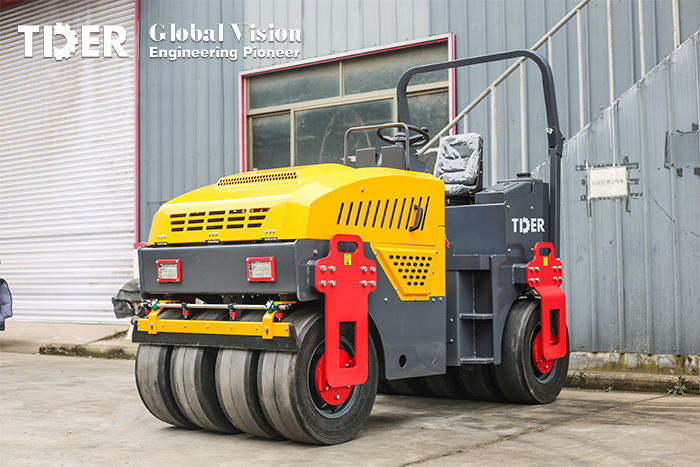
The TDER TR30-III is a full pneumatic tire roller with four front tires and five rear tires. It is a static compaction model with no vibration, relying on machine weight and pneumatic tire contact to create the required compaction and kneading effect.
It is also equipped with electronically controlled pressure-atomized water spraying and oil spraying, supporting smoother asphalt operations and reducing tire adhesion.
(5) Combination Rollers: When You Need More Than One Compaction Effect
A combination roller combines a steel drum and pneumatic tires in one machine. The purpose is not simply to offer another roller configuration, but to provide different compaction effects within a single machine.
Why choose a combination roller?
- Steel drum provides concentrated compaction
- Pneumatic tires add static pressure and kneading
- More flexible when asphalt conditions or compaction requirements vary
- Can reduce the need to switch between different machines on certain projects
Typical applications
- Asphalt paving and resurfacing
- Municipal road maintenance
- Small and medium asphalt projects
- Projects with changing compaction requirements
- Contractors who need a more versatile asphalt roller
Limitations
- Not necessarily the most efficient choice for large-scale soil compaction
- May not match a dedicated tandem roller or pneumatic tire roller for highly specialized work
- More complex configuration can require careful maintenance
What should buyers check?
- Whether the project actually requires both compaction effects
- Asphalt type and paving process
- Required working width and machine weight
- Expected annual workload
- Whether versatility is more important than specialized productivity
For contractors handling different asphalt applications, the combination configuration can be useful when one machine needs to cover several compaction requirements. However, buyers should still compare it with a dedicated double drum or pneumatic tire roller based on the actual paving process.
(6) Walk-Behind Rollers: For Small and Confined Areas
Walk-behind rollers are compact machines designed for locations where a conventional ride-on roller is too large or difficult to maneuver. Their main advantage is accessibility, rather than high production capacity.
Main advantages
- Compact size for narrow or confined jobsites
- Easier transportation between small projects
- Suitable for work close to buildings, curbs, and other obstacles
- Lower space requirements during operation
Typical applications
- Sidewalks and narrow roads
- Utility trenches and backfill
- Small asphalt repairs
- Landscaping and site preparation
- Areas around buildings and other confined spaces
Limitations
- Lower production capacity than full-size rollers
- Not suitable for large-area highway or earthwork projects
- Working width and operating weight are limited by the compact design
What should buyers check?
- Available working space and access width
- Required working width
- Single drum or double drum configuration
- Vibration system
- Expected daily workload and transport requirements
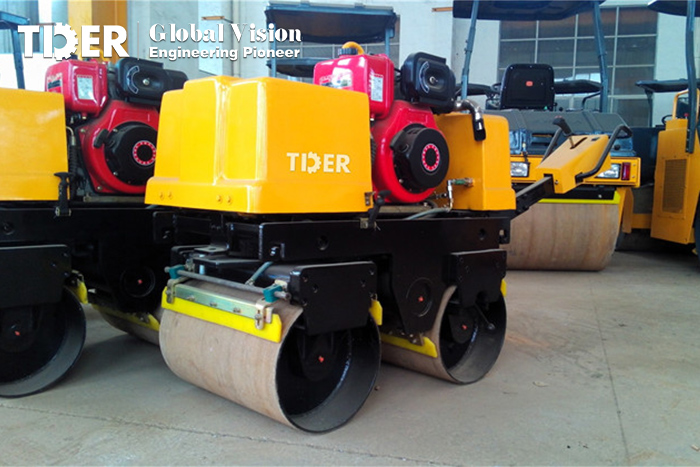
TDER offers both single-drum and double-drum walk-behind rollers, including the popular TR08. Its hydraulic steering is controlled by a dedicated button, so the operator does not need to manually pull or force the machine when changing direction.
The TR08 also uses hydraulic vibration, providing stronger vibration than conventional mechanical vibration configurations. Its hydraulic system is designed for convenient maintenance, making it practical for contractors handling frequent small-scale compaction work.
3. TDER Customer Case: Choosing the Right Roller for Municipal Maintenance
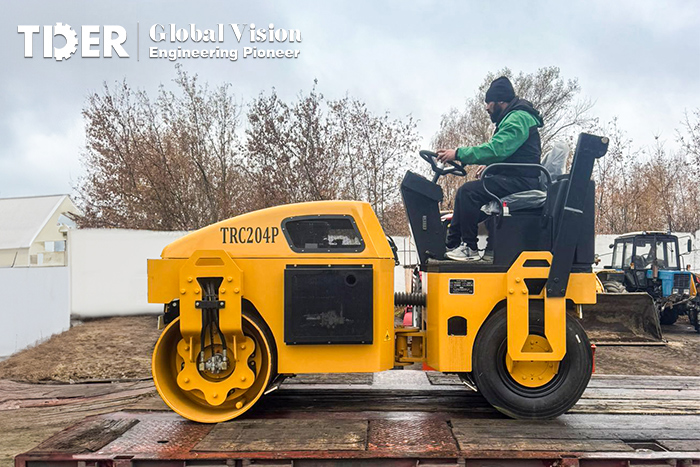
A customer from Armenia purchased a TDER TRC204P full hydraulic tandem roller with rear rubber tires for local resale and municipal maintenance projects. TDER recommended this model based on its compact design and versatile configuration, featuring a 26.5 kW diesel engine, French low-speed high-torque travel motor, vibrating front steel drum, rear rubber tires, and full hydraulic drive.
The customer uses the roller for road patching, trench backfilling, roadside repair, and residential surface compaction. After delivery, the customer shared working videos showing stable compaction and smooth maneuverability in confined areas, and later confirmed plans to continue supplying TDER rollers through his local sales network.
4. Conclusion
Different road rollers are designed for different compaction requirements, so the right choice depends on what material you are compacting, what compaction effect you need, and where the machine will operate.
For soil and road base, a single drum vibratory roller is usually the starting point. Cohesive soil may require a padfoot configuration, while asphalt projects can call for a double drum, pneumatic tire, or combination roller. When access is limited, a walk-behind roller can provide a more practical solution.
Before purchasing, buyers should consider the material, working conditions, required compaction performance, machine configuration, and project workload rather than choosing a roller based on operating weight alone. TDER offers different road roller configurations to help match these factors with actual construction requirements.
5. FAQs
What type of road roller is best for soil?
A single drum vibratory roller is generally suitable for soil, sand, gravel, and road base because its vibrating steel drum provides strong dynamic compaction. For highly cohesive soil such as clay, a padfoot configuration may be more appropriate.
Which road roller is best for asphalt?
For asphalt, double drum, pneumatic tire, and combination rollers are commonly used. The right choice depends on whether the project mainly requires uniform steel-drum compaction, tire-based kneading, or a combination of both.
What is the difference between a single drum and double drum roller?
A single drum roller is mainly designed for soil and road base compaction, while a double drum roller is more commonly used for asphalt surface compaction and finishing. The choice should be based on the material and construction stage rather than machine size alone.
When should I choose a padfoot roller?
Choose a padfoot roller when you need to compact clay, silty soil, or other cohesive materials. Its raised pads penetrate the soil and create a kneading effect that is different from the smooth surface of a standard steel drum.
Are pneumatic tire rollers vibratory?
Not necessarily. Pneumatic tire rollers can use static weight and tire kneading rather than vibration. For example, the TDER TR30-III is a static pneumatic tire roller with no vibration, using multiple rubber tires for compaction.
What should I consider before buying a road roller?
Start with the material, required compaction effect, working area, and project workload. Then compare operating weight, drum or tire configuration, vibration system, working width, engine, drive system, and maintenance requirements to find a configuration that matches the actual job.