
 Main Website

Best Compact Wheel Loader for Landscaping Projects
In landscaping operations such as garden construction, park maintenance, and site preparation, compact wheel loaders play an important role in improving material handling efficiency and reducing manual work.
However, different project conditions and working requirements create different demands for machine size, performance, and versatility. Choosing the wrong equipment can lead to lower productivity, higher operating costs, and limited application flexibility.
This article provides a professional guide to selecting the best compact wheel loader for landscaping projects, helping contractors, engineers, distributors, and equipment buyers choose the right solution for efficient and reliable operations.
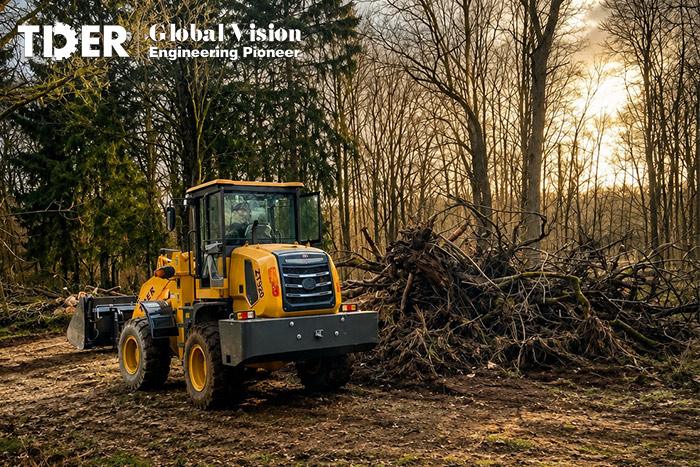
1. What is the Best Compact Wheel Loader for Landscaping Projects?
The best compact wheel loader for landscaping projects should provide a balance of loading capacity, maneuverability, and versatility. For most landscaping applications, a 1.5–2.5 ton compact wheel loader is a practical choice, offering sufficient productivity for soil handling, material transport, and site preparation while remaining flexible in residential areas, parks, and landscaping sites.
TDER provides compact wheel loader solutions in this category, including 1.5-ton, 1.8-ton, 2-ton, and 2.5-ton models, helping contractors and equipment buyers select the right machine according to different project requirements.
2. Why Choose a Compact Wheel Loader for Landscaping Projects?
Landscaping projects require equipment that can handle material loading, transportation, and site preparation while operating efficiently in areas with limited space. A compact wheel loader provides a practical balance of maneuverability, productivity, and versatility, making it suitable for residential landscaping, park maintenance, commercial landscaping, and site preparation.
Compact Size and Easy Maneuverability
Compact wheel loaders are designed for working environments where space is limited. Compared with larger loaders, they can operate more easily in gardens, residential areas, and landscaped sites while reducing damage to existing surfaces.
Efficient Material Handling
Landscaping projects involve frequent handling of materials such as soil, gravel, mulch, and stones. Compact wheel loaders provide sufficient loading performance for these tasks while maintaining lower operating costs compared with larger construction equipment.
Versatility with Multiple Attachments
With attachments such as buckets, forks, grapples, and augers, compact wheel loaders can perform multiple tasks beyond basic loading, including material transportation, site preparation, and landscaping maintenance. This helps contractors improve equipment utilization with one machine.
Why Not Choose Other Equipment?
Different machines have their own advantages, but compact wheel loaders provide a better overall balance for most landscaping applications.
|
Equipment Type |
Typical Load Capacity / Size |
Advantages in Landscaping Projects |
Limitations in Landscaping Projects |
Why Compact Wheel Loader(1.5–2.5 tons) Provides a Better Balance |
|
Small Wheel Loader |
<1.5 tons |
Compact size and suitable for light material handling |
Limited loading capacity for frequent material handling tasks |
Provides higher productivity while maintaining compact dimensions |
|
Mini Excavator |
1–3.5 tons |
Excellent digging capability and operation in narrow areas |
Limited efficiency for loading and transporting landscaping materials |
Provides better material handling efficiency and supports multiple attachments for different landscaping tasks |
|
Skid Steer Loader |
0.5–1.5 tons |
High maneuverability and attachment compatibility |
Less efficient for material handling and may cause more surface damage on lawns. |
Provides better stability, operator comfort, and material handling efficiency while reducing surface damage through articulated steering |
|
Medium/Large Wheel Loader |
3 tons+ |
High productivity for large-volume material handling |
Higher operating costs and reduced flexibility in smaller landscaping sites |
Provides sufficient loading performance with better maneuverability and lower operating costs |
3. How to Choose the Right Compact Wheel Loader for Landscaping Projects?
Choosing the right compact wheel loader requires considering project requirements, working conditions, and operating efficiency. Key factors include load capacity, bucket performance, maneuverability, attachment compatibility, and engine options.
A suitable machine can improve productivity, reduce operating costs, and handle different landscaping tasks more efficiently.
Load Capacity and Productivity
Load capacity determines the amount of material a wheel loader can handle in each cycle. For landscaping projects, a machine that is too small may reduce efficiency, while an oversized loader may lose flexibility in limited spaces.
For most landscaping applications, a 1.5–2.5 ton rated load capacity wheel loader provides a practical balance between productivity and maneuverability.
TDER offers compact wheel loaders in this range, covering different project requirements:
|
Model |
Rated Load Capacity |
Bucket Capacity |
Max. Dumping Height |
Operating Weight |
Overall Dimension |
|
ZT915 |
1,500 kg |
0.8 m³ |
2,900 mm |
3,600 kg |
5325 × 1825 × 2700 mm |
|
ZT918 |
1,800 kg |
0.8 m³ |
3,300 mm |
3,700 kg |
5325 × 1825 × 2700 mm |
|
ZT920 |
2,000 kg |
1.2 m³ |
3,500 mm |
5,000 kg |
5650 × 2000 × 2750 mm |
|
ZT925 |
2,500 kg |
1.3 m³ |
3,600 mm |
6,400 kg |
6400 × 2300 × 2950 mm |
Bucket Capacity and Working Efficiency
Bucket capacity directly affects material handling efficiency. Landscaping projects often require repeated loading and transportation of soil, gravel, mulch, and other materials.
A larger bucket improves productivity for continuous loading tasks, while a smaller bucket provides better flexibility in limited spaces. TDER compact wheel loaders are equipped with an automatic bucket leveling function, helping operators maintain the correct bucket position, reduce adjustment time, and improve overall loading efficiency.
Machine Size and Maneuverability
Landscaping projects often take place in gardens, parks, residential areas, and urban green spaces where working space is limited.
A compact wheel loader should provide:
- Compact dimensions for restricted areas
- Flexible steering for frequent movement
- Stable operation during loading tasks
TDER compact wheel loaders use a full-hydraulic steering system with a transverse oil cylinder steering design, providing flexible control and smooth operation in narrow working environments. This allows operators to maneuver efficiently around landscaping areas, improving work efficiency and reducing operational difficulty.
Attachment Compatibility and Versatility
Landscaping projects often require more than loading and transportation. A compact wheel loader with suitable attachments can perform additional tasks, improve equipment utilization, and reduce the need for multiple machines.
TDER compact wheel loaders support various attachments, including forks, hydraulic grapple forks, four-in-one buckets, augers, backhoe arms, hydraulic breakers, and dozer blades, allowing customers to handle tasks such as material handling, landscaping waste removal, planting preparation, small excavation, and site maintenance.
With flexible attachment options, one machine can adapt to different landscaping requirements and improve overall project efficiency.
Engine Options and Maintenance Support
Engine performance directly affects productivity, fuel consumption, and long-term operating costs. For landscaping projects, a reliable engine should provide stable power output, good fuel efficiency, and strong performance under continuous loading operations.
TDER compact wheel loaders are equipped with fuel-efficient turbocharged engines that provide low fuel consumption, strong power performance, and sufficient torque reserve for different working conditions. These features help maintain stable operation during material handling, loading, and site preparation tasks.
To meet different market requirements, emission standards, and service conditions, TDER also supports multiple engine options, including Cummins, Kohler, Weichai, and Fiat, allowing customers to select suitable power solutions based on their specific needs.
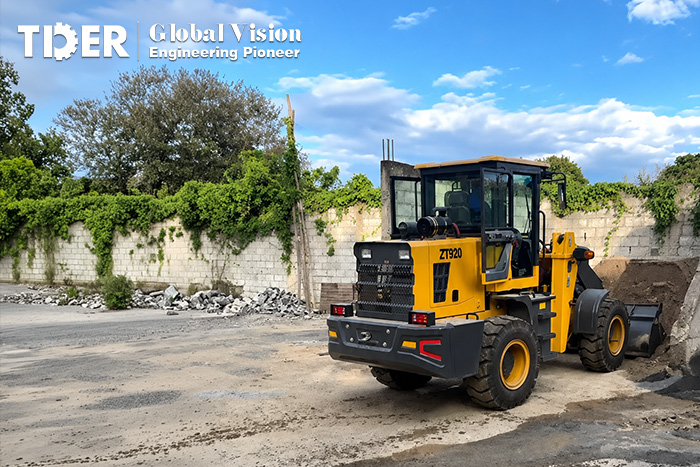
4. Real Application Case: TDER ZT920 Compact Wheel Loader in Dominican Republic
A customer in the Dominican Republic used the TDER ZT920 2-ton compact wheel loader for material handling operations at a small construction site.
During operation, the machine worked in a relatively limited area between a concrete wall and a dump truck, where frequent positioning and turning were required. Thanks to its compact size and flexible articulated steering design, the ZT920 could move and adjust its position easily in the confined workspace, improving loading efficiency and reducing unnecessary movement.
The customer also used the ZT920 to load soil and gravel materials into trucks. With its 3,500 mm maximum dumping height, the loader could easily reach above the truck bed for efficient unloading, while the 1.2 m³ bucket provided sufficient capacity for continuous material handling.
This real application demonstrates the advantages of a compact wheel loader in landscaping, construction, and site preparation projects, where flexibility, loading performance, and efficient operation are equally important.
5. Conclusion
In summary, choosing the right compact wheel loader for landscaping projects requires balancing productivity, maneuverability, and versatility. For most landscaping applications, a 1.5–2.5 ton compact wheel loader provides an effective balance between working performance and flexibility.
With multiple models, attachment options, and flexible configurations, TDER compact wheel loaders offer reliable solutions for landscaping, site preparation, and material handling operations.
6. FAQs
What size compact wheel loader is best for landscaping projects?
For most landscaping applications, a 1.5–2.5 ton compact wheel loader provides a practical balance between productivity and maneuverability. Smaller models are suitable for light material handling and limited spaces, while larger models offer higher loading capacity for frequent soil, gravel, and material transportation tasks.
TDER offers 1.5-ton, 1.8-ton, 2-ton, and 2.5-ton compact wheel loaders to meet different landscaping requirements.
Can a compact wheel loader replace multiple machines in landscaping projects?
Yes. With attachments such as buckets, forks, grapples, augers, and backhoe arms, one compact wheel loader can perform material handling, site preparation, waste removal, and other landscaping tasks.
What attachments are commonly used with compact wheel loaders for landscaping?
Common attachments include buckets for soil and material handling, forks for transporting plants and materials, grapples for branches and landscaping waste, augers for planting and drilling applications, and four-in-one buckets for loading, grabbing, and leveling tasks.
What factors should buyers consider when purchasing a compact wheel loader?
Key factors include load capacity, bucket capacity, machine size, steering flexibility, attachment compatibility, engine options, and maintenance support. The right combination helps improve productivity and reduce operating costs.
Why choose TDER compact wheel loaders for landscaping projects?
TDER compact wheel loaders are designed for landscaping and material handling applications where flexibility and efficiency are required. The product range covers 1.5–2.5 ton rated load capacities, with multiple attachment options and engine configurations available.
Features such as flexible hydraulic steering, automatic bucket leveling, and fuel-efficient turbocharged engines help contractors achieve reliable performance in different working conditions.