
 Main Website

Importing Construction Machinery from China: A Buyer’s Roadmap from Selection to Delivery
Buying construction machinery from China can offer international buyers a wider range of equipment and competitive pricing. But the real challenge is not simply finding a machine at the right price. Buyers also need to confirm whether the machine is suitable for the job, meets local requirements, can be cleared through customs, and can be delivered safely and supported after arrival.
Whether you are buying a wheel loader, excavator, concrete mixer truck, or other construction equipment, the following roadmap explains what to check before placing an order and what to expect from quotation to delivery.
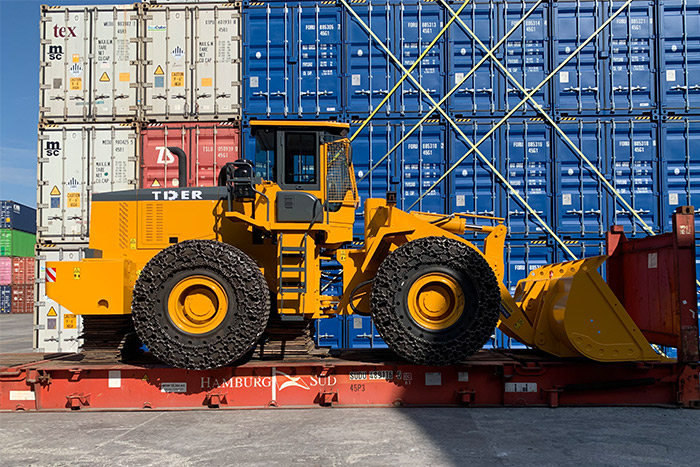
1. Quick Answer: What Should You Check Before Importing Construction Machinery?
Before paying a deposit, check these five points:
- Machine suitability – Confirm operating weight, engine power, bucket capacity, working dimensions, and intended application.
- Local compliance – Check the destination country's requirements for emissions, safety, road registration, and other applicable regulations.
- HS classification and import requirements – Confirm the likely HS classification with your customs broker before shipment.
- Total landed cost – Look beyond the machine price and calculate freight, insurance where applicable, duties, taxes, port charges, customs fees, and inland transportation.
- Supplier and machine verification – Check the supplier's company information, technical documents, production status, inspection arrangements, warranty, and spare-parts support.
The key principle is simple: verify whether the machine can be legally imported and practically used before you focus only on the purchase price.
2. Start With the Machine, Not the Supplier
One of the most common mistakes made by first-time buyers is asking several suppliers for their lowest price before clearly defining the equipment they need.
Construction machinery is application-specific. A machine suitable for loading aggregates may not be the right choice for trenching, road construction, mining, agricultural work, or municipal projects.
For example, when comparing loaders or excavators, buyers should consider:
- Operating weight
- Engine power and emission stage
- Bucket capacity
- Maximum digging depth or lifting height
- Overall dimensions
- Hydraulic system and auxiliary flow
- Drive configuration
- Attachments required
- Working environment
- Expected workload
TDER supplies a broad range of construction machinery, including loaders, excavators, backhoe loaders, skid steer loaders, road machinery, agricultural machinery, concrete equipment, piling machinery, mining equipment, and drilling equipment.
The right starting point is therefore not “Which machine is cheapest?”, but “Which configuration matches my application and local requirements?”
3. Check Compliance Before Paying the Deposit
Once you have identified a suitable machine, check the destination country's import requirements before production begins.
Key items to verify
Engine and emissions
For diesel-powered non-road machinery, emission requirements vary by market. For example, the EU regulates engines used in non-road mobile machinery under Regulation (EU) 2016/1628, including Stage V emission requirements. Construction machinery such as excavators and loaders falls within the scope of non-road mobile machinery.
Do not assume that a machine compliant in one country will automatically meet another country's requirements.
Ask the supplier for:
- Engine model
- Rated power
- Emission stage
- Engine identification/nameplate information
- Applicable conformity documents
Safety and product compliance
Depending on the destination market and machine type, buyers may also need applicable conformity documentation, technical files, certificates, or safety documentation.
HS classification
HS classification should be confirmed with the destination-country customs broker rather than relying only on a supplier's quotation. The exact classification can depend on the machine configuration and local tariff schedule.
Buyer tip
Before paying the deposit, send the machine's model, specifications, engine information and intended use to your customs broker. Ask:
“Can this exact configuration be imported and cleared in my country, and what documents will be required?”
This simple step can prevent expensive problems later.
3. Choose the Right Incoterm for Your Situation
Incoterms® 2020 defines the responsibilities, costs and risks between buyers and sellers in international sales. The current version contains 11 trade terms.
For construction machinery buyers, several commonly discussed options include:
| Incoterm | Generally means | Buyer should pay attention to |
|---|---|---|
| EXW | Goods made available at the seller's premises | Buyer takes on significant logistics responsibility |
| FOB | Seller delivers goods on board the vessel at the named port | Buyer arranges main ocean freight and import clearance |
| CIF | Seller pays cost, insurance and freight to the named destination port | Buyer still handles import clearance and destination costs |
| DAP | Seller delivers to the named destination, ready for unloading | Buyer normally handles import clearance and duties |
ICC specifically notes that EXW is primarily suitable for domestic trade and that buyers should consider other rules where export formalities are involved.
For a first-time importer, the “best” Incoterm is not automatically CIF or DAP. It depends on your freight-forwarding experience, destination, shipment method, and ability to handle customs and local delivery.
Always specify the named place or port and the version of Incoterms® used in the contract.
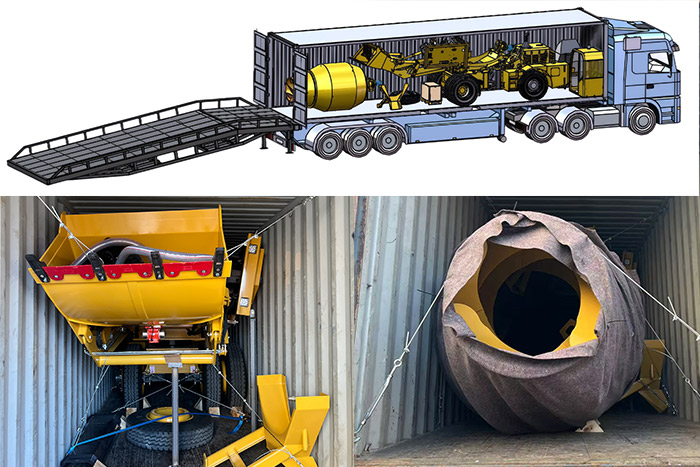
4. How to Verify a Chinese Construction Machinery Supplier
Price is important, but supplier reliability can have a much greater impact on the final cost of an imported machine.
Before placing an order, consider checking:
- Is the company a manufacturer, exporter, or trading company?
- How long has it been exporting machinery?
- Can it provide detailed technical specifications?
- Can it provide engine and machine identification information?
- Are spare parts available?
- What is included in the warranty?
- Can the supplier provide production photos or videos?
- Can you arrange a pre-shipment inspection?
- What after-sales technical support is available?
For TDER, for example, supplier support can include equipment selection, technical configuration, production coordination, export documentation, shipment arrangements, and after-sales support.
The important point is to verify these services before signing the contract rather than assuming they will be available after delivery.
5. Production and Pre-Shipment Inspection
Once the configuration, contract and payment terms are confirmed, production can begin.
For machinery purchases, buyers should not wait until the equipment reaches the destination port to discover a problem.
Before shipment, confirm:
- Machine model and configuration
- Engine model and power
- Machine dimensions and operating weight
- Attachments and accessories
- Serial number/nameplate
- Hydraulic and electrical functions
- Safety equipment
- Paint and overall condition
- Spare parts included in the order
- Manuals and technical documents
For higher-value orders, buyers may also arrange an independent inspection through a third-party inspection company.
TDER can provide production-stage photos and videos so buyers can review the completed equipment before shipment. The exact inspection and documentation arrangement should be agreed in the sales contract.
6. Documents You Should Prepare for Import
The exact document requirements vary by country and machine, but an international machinery shipment commonly involves:
| Document | Main purpose |
|---|---|
| Commercial Invoice | Shows transaction value, currency and trade terms |
| Packing List | Identifies package details, dimensions and weights |
| Bill of Lading | Evidence of shipment and transport document |
| Sales Contract | Defines commercial terms and responsibilities |
| Certificate of Origin | Identifies the country of origin where required |
| Technical Specifications | Helps customs and authorities identify the machinery |
| Engine/Emission Documents | Supports applicable environmental compliance |
| Machine Nameplate Information | Confirms model, serial number and technical data |
| Insurance Documents | Required or useful depending on the trade term and shipment |
| Other Local Documents | May be required by the destination country |
For machines with special regulatory requirements, additional certificates or approvals may be necessary.
Do not use a generic document checklist as a substitute for checking your country's actual import requirements.
7. Real-World Example: Preparing Construction Machinery for Import into Colombia
Colombia is a useful example of why buyers should check customs requirements before shipment.
Under Colombia's customs framework, import declarations may need to be submitted in advance. Decree 659 of 2024 amended the relevant customs rules to require an advance import declaration at least 48 hours before the goods arrive in the national customs territory, subject to the applicable procedures and exceptions.
For a Colombian buyer importing a TDER wheel loader, excavator, or other construction machine, a practical preparation process would therefore be:
Step 1 — Confirm the machine
Identify the exact model, configuration, engine and intended application.
Step 2 — Confirm classification
Provide the technical specifications to the Colombian customs broker and verify the applicable HS classification and import requirements.
Step 3 — Check documents
Prepare the commercial invoice, packing list, bill of lading, origin documentation where applicable, technical information and any required compliance documents.
Step 4 — Prepare the advance declaration
Coordinate with the customs broker so the required declaration can be submitted within the applicable timeframe.
Step 5 — Arrange delivery
After customs clearance, arrange inland transportation from the port to the final jobsite.
The lesson is important: customs preparation should begin before the machine leaves China, not after it arrives at the port.
8. From Factory to Jobsite: A Simple Import Timeline
| Stage | Main tasks |
|---|---|
| 1. Equipment Selection | Define application, specifications and configuration |
| 2. Supplier & Quotation | Compare suppliers, prices, warranty and support |
| 3. Compliance Check | Verify import requirements, emissions and documentation |
| 4. Contract & Payment | Confirm specifications, Incoterm and payment milestones |
| 5. Production | Manufacture and configure the equipment |
| 6. Inspection | Check machine condition, configuration and documents |
| 7. Shipment | Export clearance, loading and international transportation |
| 8. Customs Clearance | Submit documents, complete customs procedures and pay applicable taxes/fees |
| 9. Delivery & Acceptance | Transport to the jobsite, inspect and commission the machine |
| 10. After-Sales Support |
Spare parts, technical assistance and warranty support |
Actual production, shipping and customs-clearance times vary according to the machine, destination, shipping method, port conditions and local procedures.
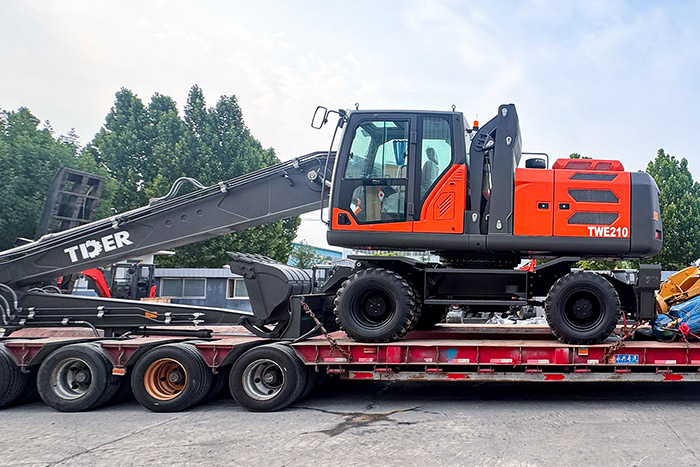
9. Key Takeaways
A successful construction machinery import can be simplified into one process:
Define the application → select the right machine → verify import requirements → evaluate the supplier → confirm the contract and Incoterm → inspect before shipment → prepare customs documents → arrange delivery and after-sales support.
Do not make purchase price your only decision factor. The better question is:
What will this machine actually cost me to import, operate, and maintain—and can my supplier support me after delivery?
With experience in construction machinery manufacturing and international export, TDER can support buyers through equipment selection, configuration, production, documentation and shipment preparation.
10. FAQs
What construction machinery can I import from China?
The range is broad. Depending on the supplier and destination market, buyers can source wheel loaders, excavators, backhoe loaders, skid steer loaders, road machinery, agricultural machinery, concrete equipment, piling machines, mining equipment, drilling equipment and other specialized construction machinery.
What should I check before buying construction machinery from China?
Start with the machine's application, operating weight, engine power, dimensions, working capacity, attachments and local compliance requirements. Then verify the supplier, contract terms, documents and after-sales support.
Do I need to check emission standards before importing a diesel construction machine?
Yes. Emission requirements vary by country and machine type. For example, EU rules regulate emissions from engines used in non-road mobile machinery under Regulation (EU) 2016/1628. Always confirm the applicable requirement in the destination market before ordering.
Should I confirm the HS code before ordering?
Yes. The HS classification should be confirmed according to the actual machine configuration and destination country's tariff system. Your local customs broker is the best party to verify the final classification before shipment.
Is CIF better than FOB for a first-time importer?
Not necessarily. CIF may simplify international shipping, while FOB can give experienced buyers greater control over freight. Compare the complete landed cost and the responsibilities included under each term.
Can TDER help first-time importers?
Yes. TDER can support international buyers with machine selection, technical configuration, production coordination, export documentation and shipment preparation. The specific services available depend on the project, destination and agreed trade terms.